
We Exist So Worldwide Inequalities Don't Have To
Our Four Es Framework
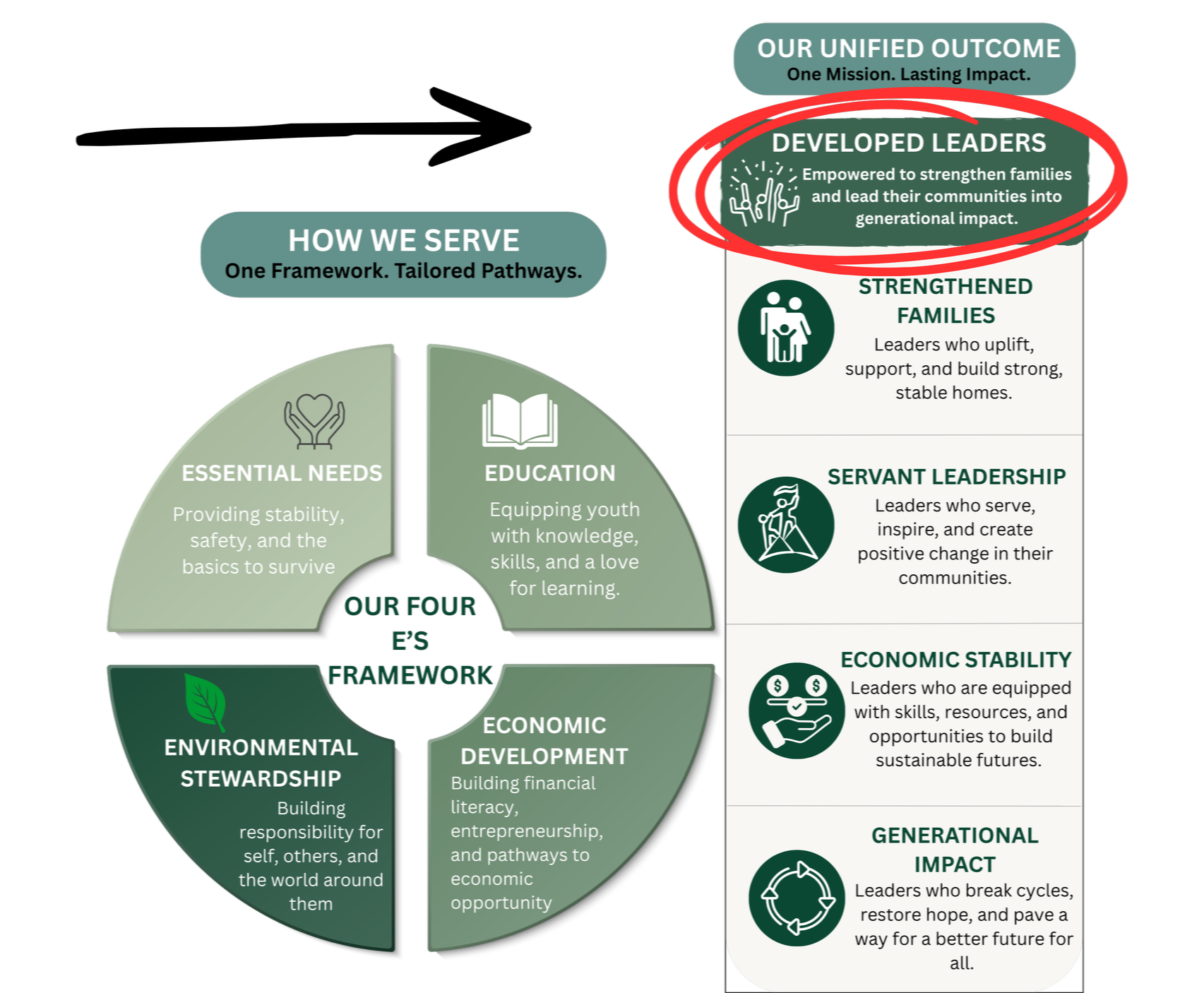
At Global Works Trust, our work is built on an integrated model we call The 4 Es, an innovative and holistic framework designed to strengthen the full ecosystem of a child and the community that surrounds them.
-

Essential Needs
Building Character and Relational Strength
We develop strong foundations through character building, emotional support, interpersonal skills, and servant leadership. This equips youth with the discipline, confidence, and values needed to grow into responsible leaders.
-

Education
Equipping for Academic Success
We provide academic support through tutoring, study skills, workshops, and college and career preparation. These tools help youth build confidence, improve performance, and pursue meaningful opportunities.
-

Environmental Stewardship
Responsibility Through Action
We engage youth in sustainable practices, research, and community clean-ups. Through hands-on involvement, they develop ownership, pride, and responsibility for their communities.
-

Economic Development
Creating Pathways to Independence
We equip youth with financial literacy, budgeting skills, and entrepreneurial training. This prepares them to generate income, build stability, and contribute to long-term economic growth.
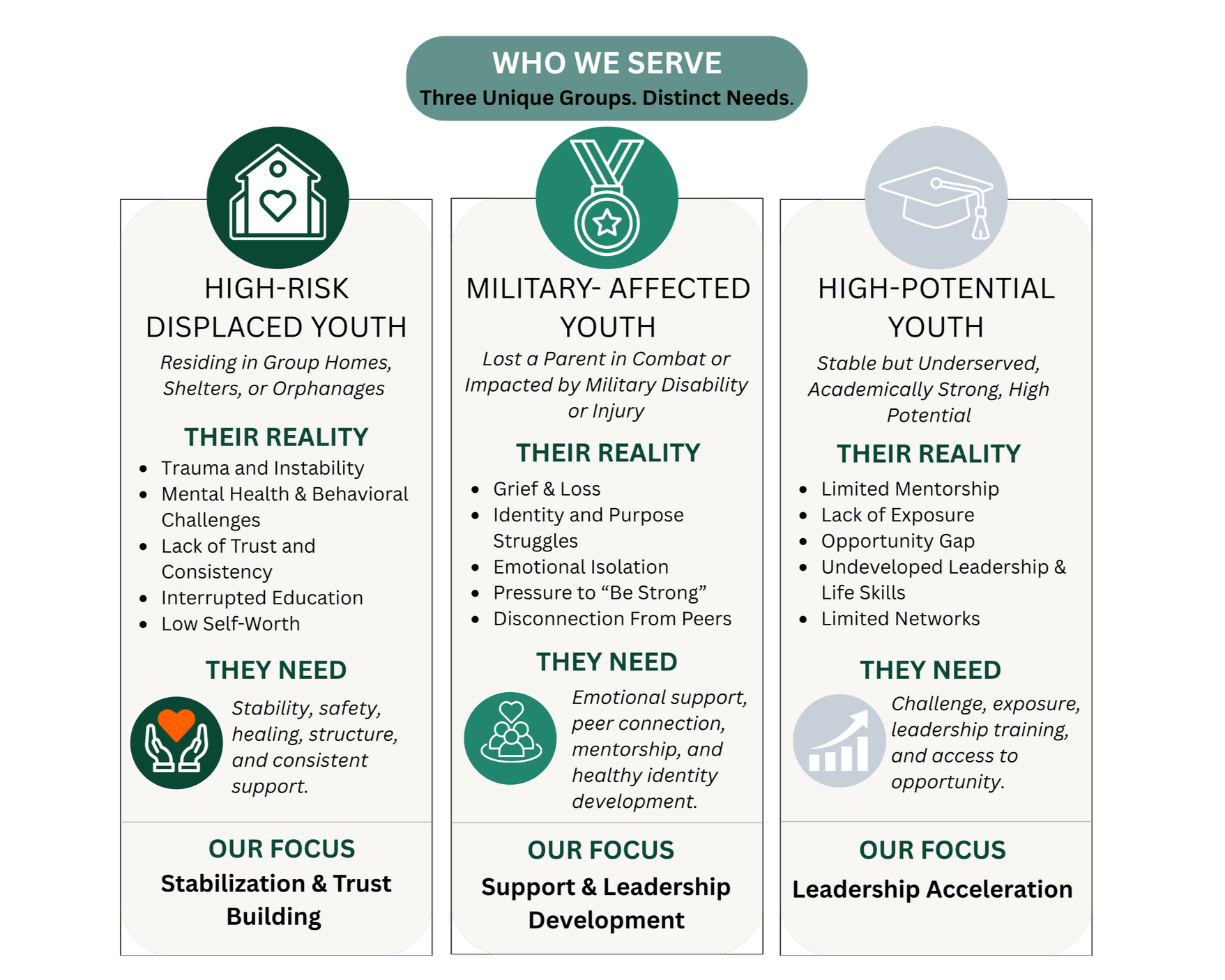
We serve fatherless youth ages 12–17 through tailored pathways that meet their unique needs, unlock their potential, and empower them to create lasting impact in their communities.

We Holistically Develop Fatherless Leaders to Build Strong Communities
Our model is designed not merely to relieve hardship, but to break generational cycles and establish long-term prosperity rooted in faith, stewardship, and self-sustaining growth.
Humanitarian Response Team (HRT)
Global Works Trust deploys structured humanitarian response efforts during crises affecting fatherless or disadvantaged children and families. Through rapid stabilization, child protection, environmental recovery, and economic restoration, our Humanitarian Response Team delivers accountable, Christ-centered assistance that transitions from relief to long-term resilience.
Guiding Principles
Child Protection First
Every deployment prioritizes the physical, emotional, and spiritual protection of children.Dignity Through Structure
Aid is delivered respectfully and responsibly, avoiding dependency-based models.Local Partnership Over Imposition
We support and strengthen existing local structures rather than replace them.Accountability & Stewardship
All humanitarian funds and supplies are tracked, documented, and transparently reported.Sustainability Beyond Relief
Every response includes an exit or transition strategy into long-term development.
Deployment Triggers
The HRT may activate in response to:
• Natural disasters (flooding, drought, storms, etc.)
• Civil unrest or displacement
• Public health emergencies
• Food insecurity crises
• Infrastructure collapse affecting children/families
• Environmental contamination or sanitation emergencies
Activation requires:
• Leadership approval
• Risk assessment
• Funding capacity review
• Local partnership confirmation
Core Response Pillars
Essential Needs Stabilization: Emergency food distribution, clean water access, temporary shelter coordination, and hygiene and sanitation kits.
Child and Family Protection: Safe gathering spaces for children, trauma-informed engagement, family reunification coordination (if needed), and monitoring against exploitation or trafficking risks.
Environmental & Sanitation Recovery: Debris cleanup, temporary sanitation systems, water purification coordination, and safe waste disposal education.
Economic Recovery Pathway: Identify local employment opportunities, micro-enterprise restart support, tool and trade restoration, agriculture and livelihood restart support
Wondering How to Get Involved?
You can support our mission through financial contributions that advance our programs and infrastructure, fueling education, essential support, environmental stewardship, and economic development.
We also welcome in-kind donations such as materials, furniture, land, buildings, and educational supplies. In addition, you can give your time by volunteering, mentoring youth, supporting events, or sharing your professional expertise.